Choosing the right accounting software can make managing your business finances much easier. It helps you track income and expenses, send invoices, prepare for tax time, and stay on top of your finances.
With so many options available, choosing the right platform can feel overwhelming. Each program offers different features, pricing, and tools. The best choice depends on the size of your business, your industry, and how you manage your finances.
This guide explains what to look for when choosing accounting software and reviews the best accounting for small business in Australia for 2026.
Why Small Businesses Need Accounting Software
Many small business owners start by tracking income and expenses in spreadsheets. While this may work at first, it often becomes harder to manage as the business grows.
Accounting packages for small businesses helps keep your financial records organised in one place. It can also reduce manual work and make everyday tasks much easier.
Some of the biggest benefits include:
- Tracking income and expenses
- Creating and sending invoices
- Recording bills and payments
- Connecting with your business bank account
- Preparing Business Activity Statements (BAS)
- Monitoring cash flow
- Producing financial reports
- Working more efficiently with your accountant
Many accounting programs also store your records securely in the cloud. This means you can access your financial information from almost anywhere with an internet connection.
The best accounting for small business should save you time while giving you a clearer picture of your business finances.
What to Look for in Accounting Software
The software should be simple to learn and easy to use every day. A clean dashboard and clear reports can save time and reduce mistakes.
| Feature | Why It Matters |
|---|---|
| Ease of Use | Choose software that is simple to learn and easy to use every day. |
| Cloud Access | Access your accounts from anywhere and work with your accountant in real time. |
| Bank Feeds | Import bank transactions automatically to reduce manual data entry. |
| Invoicing | Create invoices, track payments, and send payment reminders with ease. |
| Payroll | Manage wages, superannuation, leave, and payroll reporting in one place. |
| Reporting | View reports that help you track performance, cash flow, and business growth. |
| Integrations | Connect with tools such as payment systems, CRM software, inventory, and point of sale platforms. |
| Scalability | Choose software that can support your business as it grows. |
Should You Choose Accounting Software on Your Own?
The right accounting software depends on your business. A sole trader may need simple invoicing, while a growing business may need payroll, inventory, and detailed reporting.
Speaking with an accountant before you choose a platform can help you find the right fit and avoid costly mistakes.
At Core Business Accountants, we help businesses choose, set up, and get the most from their accounting software.
The Top 5 Best Accounting Software for Small Businesses
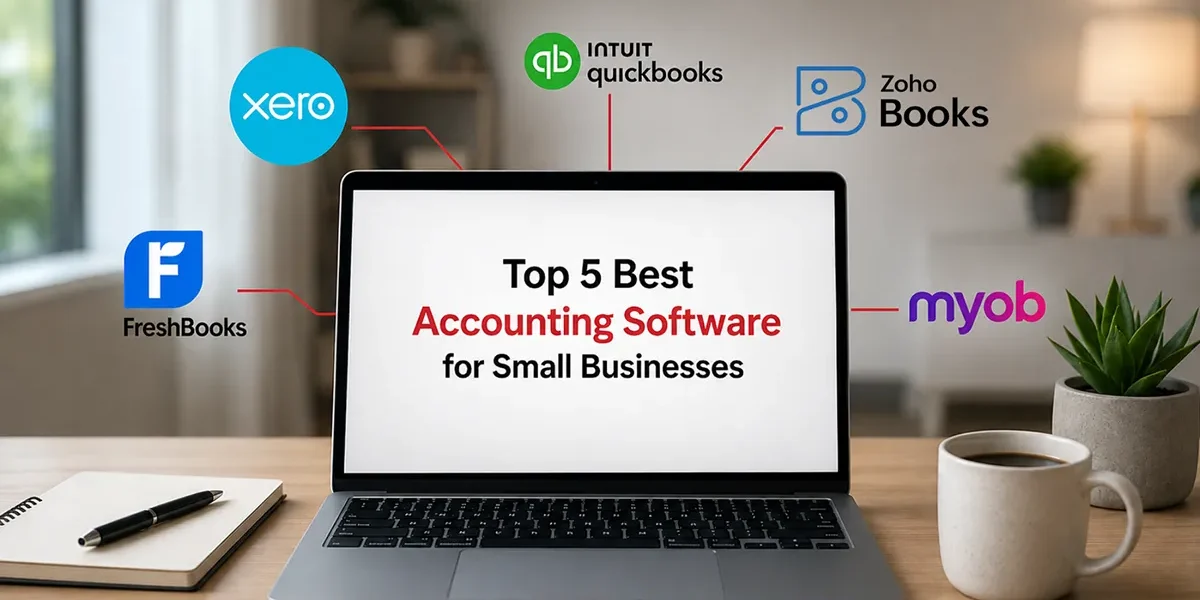
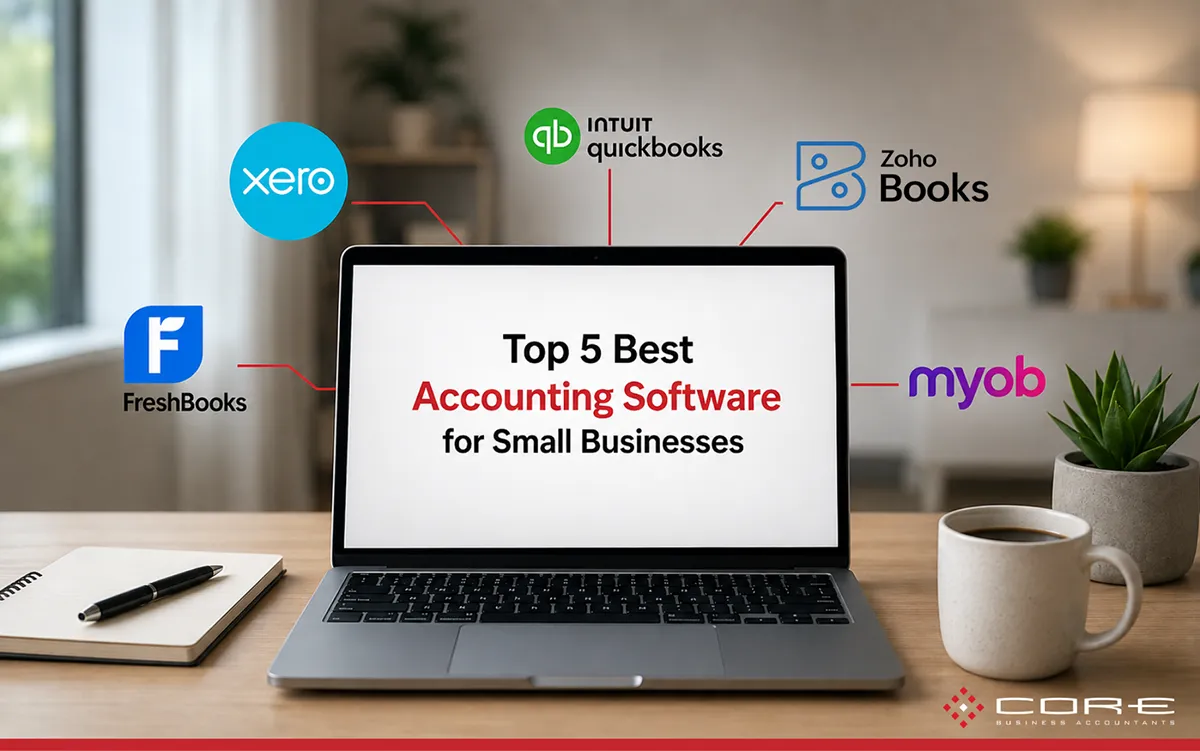
Below are five of the most popular accounting software platforms used by Australian small businesses in 2026. While each offers different strengths, Xero is by far the most widely used platform among our clients, with around 70% of Core Business Accountants clients using it to manage their finances. The best option for your business will ultimately depend on your industry, size and day-to-day operations.
1. MYOB
MYOB has been helping Australian businesses manage their finances for decades. It remains one of the most trusted accounting platforms and is well suited to businesses of all sizes.
It includes a wide range of accounting features, including invoicing, expense tracking, payroll, GST reporting, inventory management, and financial reporting. MYOB also integrates with many third party business applications.
Best for
Businesses looking for a complete accounting solution that can support growth.
Key features
- Cloud accounting
- Payroll and Single Touch Payroll reporting
- Invoicing and expense tracking
- Inventory management
- Bank feeds
- Financial reporting
- Integration with a wide range of business apps
2. Xero
Xero is one of the most popular cloud accounting platforms for Australian small businesses. Its simple interface and strong integration options make it a favourite for many business owners and accountants.
The platform allows you to send invoices, reconcile bank transactions, manage bills, and monitor cash flow from one dashboard.
Best for
Small to medium sized businesses wanting an easy to use cloud accounting platform.
Key features
- Cloud based accounting
- Automatic bank feeds
- Online invoicing
- Payroll options
- Real time financial reporting
- Large range of third party integrations
- Mobile app access
3. QuickBooks Online
QuickBooks Online is a flexible accounting solution that suits businesses needing detailed financial reporting and inventory management.
It allows business owners to track income and expenses, create invoices, manage GST, and monitor business performance.
Best for
Businesses with more complex inventory or reporting requirements.
Key features
- Cloud accounting
- Inventory tracking
- Custom financial reports
- Expense management
- Bank reconciliation
- GST tracking
- Mobile access
4. FreshBooks
FreshBooks is designed with freelancers, consultants, and sole traders in mind. It focuses on making invoicing, time tracking, and expense management as simple as possible.
Its clean layout makes it easy for users with limited accounting experience to manage their finances.
Best for
Sole traders, freelancers, and service based businesses.
Key features
- Professional invoicing
- Expense tracking
- Time tracking
- Project management tools
- Cloud access
- Financial reporting
5. Zoho Books
Zoho Books is part of the wider Zoho business software ecosystem. It works particularly well for businesses already using Zoho CRM or other Zoho applications.
It combines accounting features with automation tools that can help reduce repetitive administration tasks.
Best for
Businesses wanting both accounting software and CRM integration.
Key features
- Cloud accounting
- Automated workflows
- GST compliant invoicing
- Expense management
- Financial reporting
- Integration with Zoho CRM and other Zoho products

Which Accounting Software Is Right for Your Business?
There is no one size fits all answer to the best accounting for small business. The right software depends on your business needs.
MYOB is a great all round option for growing businesses, while Xero is popular for its ease of use and cloud features. FreshBooks suits freelancers and sole traders. QuickBooks Online is ideal for businesses with more complex reporting or inventory. Zoho Books works well for businesses already using Zoho products.
Once you’ve chosen the right software, setting it up correctly will help you get the most value from it.
Ready to choose the right accounting software with confidence? Learn how we can help.
Why Professional Advice Still Matters
Accounting software can make managing your finances easier, but it is only one part of the picture. Choosing the right software and setting it up correctly can save time and help your business run more smoothly.
At Core Business Accountants, we help small businesses choose the right accounting software and get the most from it. We can also assist with setup, software migration, bookkeeping, payroll, BAS, and ongoing accounting advice.
If you are unsure which software is right for your business, our team is here to help.
Comparison Table: Best Accounting Software for Small Businesses
The table below provides a quick comparison of the five accounting software platforms featured in this guide.
| Software | Best For | Cloud Based | Payroll | Inventory | CRM Integration |
|---|---|---|---|---|---|
| MYOB | Growing small to medium businesses | ✓ | ✓ | ✓ | Limited |
| Xero | Small businesses wanting an easy to use platform | ✓ | ✓ | Via integrations | Extensive |
| QuickBooks Online | Businesses with complex inventory | ✓ | ✓ | ✓ | Via integrations |
| FreshBooks | Sole traders and freelancers | ✓ | Limited | Basic | Limited |
| Zoho Books | Businesses using Zoho CRM | ✓ | Varies by plan | Basic | ✓ |
Features and inclusions may vary depending on the subscription plan you choose. Always check the latest product information before making a decision.
Final Thoughts
Finding the best accounting for small business comes down to choosing software that fits the way you work.
For many Australian businesses, MYOB and Xero continue to be two of the strongest all round options.
Before making your decision, think about your current needs as well as where your business may be in the next few years. Choosing software that can grow with your business can save you time and reduce the need to change systems later.
If you need help selecting, setting up, or managing your accounting software, the team at Core Business Accountants is here to help.
Frequently Asked Questions
The best accounting software depends on your business needs. MYOB and Xero are popular choices for many Australian small businesses. They offer a wide range of accounting features, cloud access, and strong integration options. Sole traders may prefer FreshBooks, while businesses with more complex inventory requirements may benefit from QuickBooks Online.
Pricing varies between providers and subscription plans. Most accounting software is available on a monthly subscription. Different plans can bebased on the number of users and features included. Compare plans carefully to make sure you only pay for the features your business needs.
Yes. Accounting software helps automate many bookkeeping tasks, but it does not replace professional advice. An accountant can help with tax planning, financial reporting, compliance, business growth strategies, and making sure your software is set up correctly.
Many small business owners find Xero and FreshBooks easy to learn because they have simple dashboards and straightforward navigation. The easiest platform for you will depend on the features you need and your level of accounting experience.